Duration
2 NIGHTSBest For
Guests who value varied terrain, lookouts, and slower scenic rhythms.Group Size
2-6 guestsAccommodation
Ikweta Safari CampSafari Overview
Why this Meru short break stands out
Meru is less visited than Kenya's headline parks, making it ideal for travellers seeking privacy, wild scenery, and unhurried game drives.
This route combines riverine habitats, broad plains, and quality camp comfort at Ikweta Safari Camp in just three days.
Meru National Park is one of Kenya’s most distinctive safari destinations, famous for its wild, relatively uncrowded character, diverse landscapes, abundant wildlife, and the conservation story associated with George and Joy Adamson and Elsa the lioness.
It is located in eastern Kenya, roughly northeast of Nairobi and east of Mount Kenya, and forms part of a larger protected ecosystem along the Tana River.
Meru National Park is located in eastern Kenya, about 350 km northeast of Nairobi. The park lies east of Mount Kenya and is crossed by several permanent rivers, including the Tana, Rojewero, and Ura Rivers.
Area: approximately 870 km² (336 square miles). The park forms part of a larger protected ecosystem together with Kora National Park and surrounding wildlife areas.
Landscape: savanna, grassland, riverine forest, wetlands, bushland and rocky areas.
Landscape and scenery
Meru is particularly interesting because it is not simply a dry savanna park.
You'll encounter: Open golden grasslands, Acacia and other thorny woodland, Doum-palm vegetation.
Dense riverine forests, Seasonal wetlands and swamps, Rocky hills and kopjes, Numerous streams and rivers.
The Tana River is especially important to the ecosystem. Its permanent water supports vegetation and wildlife even when surrounding areas become considerably drier.
The park also receives more rainfall than many northern and eastern Kenyan safari areas, contributing to its unusually green appearance during wet periods.
Wildlife
Meru has an impressive variety of wildlife, although animal sightings can be less predictable than in heavily visited parks.
Big Five: You can find lion, Leopard, African elephant, Cape buffalo, and rhinoceros.
Both black and white rhinoceros occur in the protected area, particularly through the Meru Rhino Sanctuary.
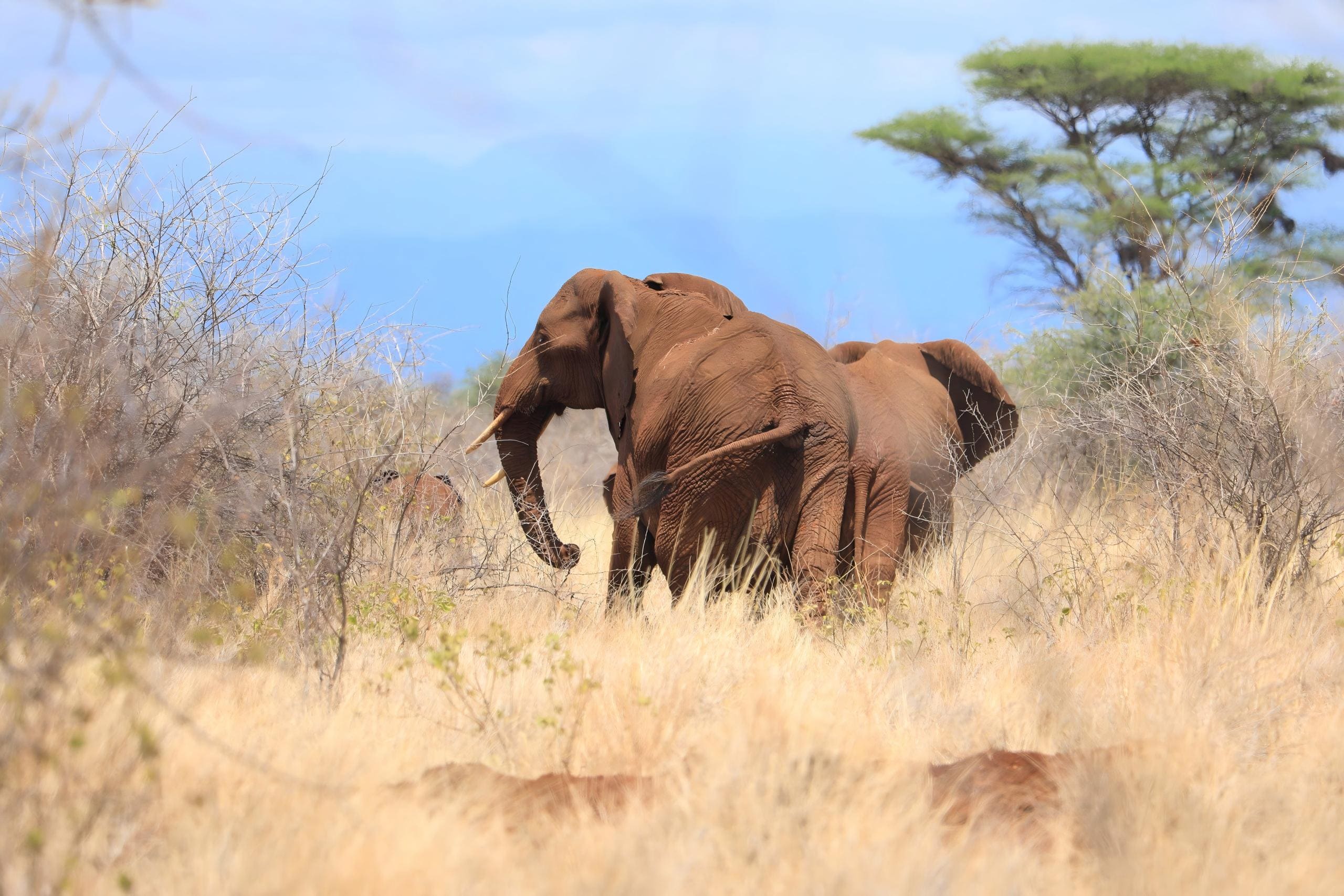
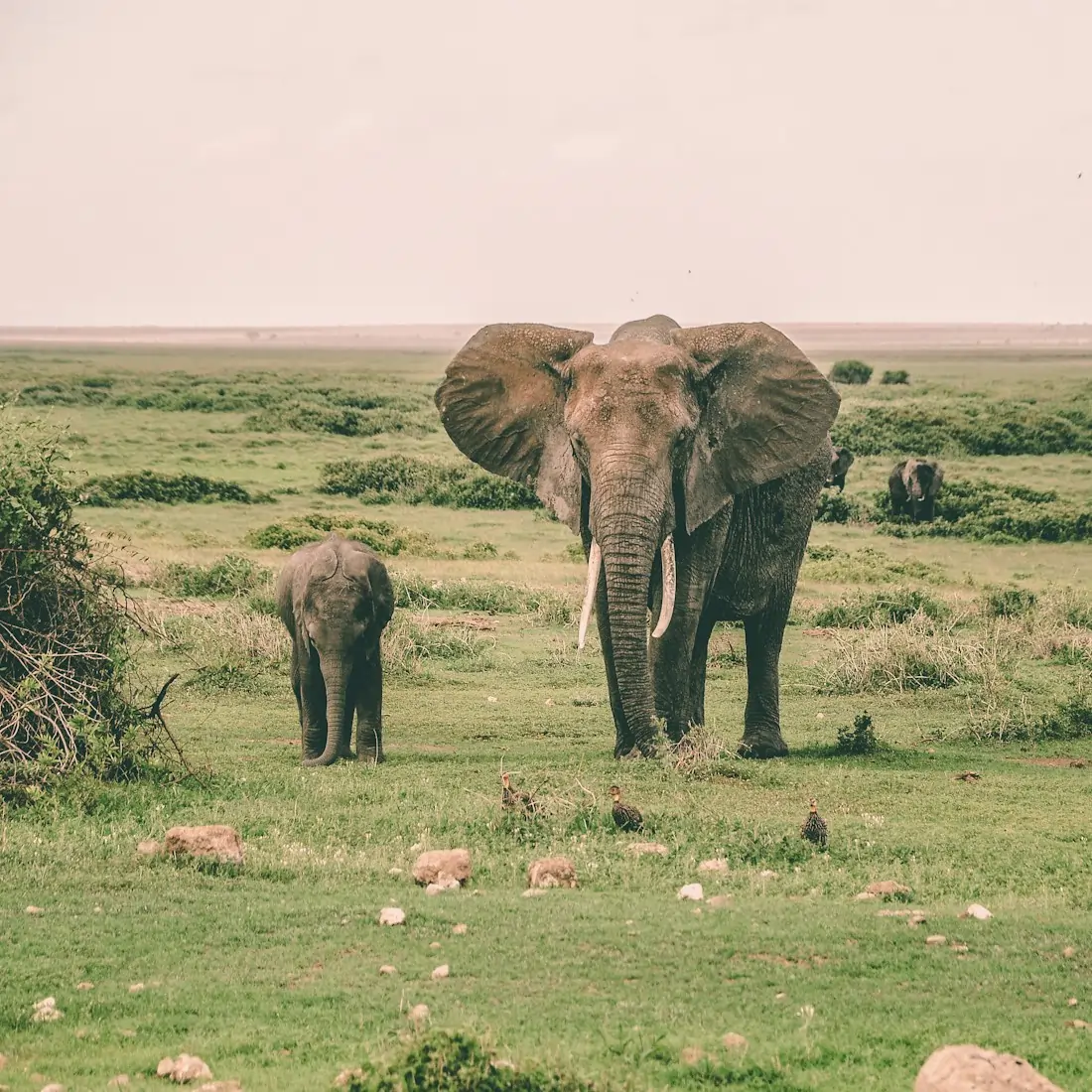
Elephants are among the park's most conspicuous animals, and herds can frequently be encountered around watercourses.
Other mammals: Meru is also known for: Grevy's zebra, Common zebra, Giraffe, Hippo, Warthog, Impala, Grant's gazelle, Dik-dik, Waterbuck, Eland, Oryx, Hartebeest, Lesser kudu, Buffalo, African wild dog.
The presence of Grevy's zebra is particularly significant. This endangered zebra species is much more strongly associated with northern and eastern Kenya than with the Maasai Mara ecosystem.
Meru's special wildlife
One of the things that makes Meru particularly rewarding for experienced safari travellers is its combination of species associated with both eastern/northern Kenya and more conventional East African savanna.
Among the species and wildlife experiences worth looking for are: Grevy's zebra — one of Kenya's most distinctive endangered mammals, Lesser kudu — a beautiful antelope that favors dense bush and can be difficult to spot, Gerenuk — the long-necked antelope is another species associated with the drier eastern/northern Kenyan ecosystems, Reticulated giraffe — depending on the area and current distribution, visitors may encounter this distinctive giraffe, African wild dog — Meru is one of the Kenyan parks where sightings are possible, although they are never guaranteed.
Rhino conservation
Today, seeing rhinos is one of the experiences that can distinguish a Meru safari from some other Kenyan destinations.
The Elsa the lioness connection
Meru has an important place in wildlife history because of Joy and George Adamson and Elsa the lioness.
Elsa was an orphaned lioness raised by the Adamsons and later returned to the wild. Her story became internationally famous through the book and film Born Free.
Born Free: Much of the Adamsons' work was associated with the Meru region, and the Adamson's fall area on the Tana River is associated with this history.
For visitors interested in conservation history, Meru therefore offers more than a conventional game-drive experience.
Birdwatching: Meru is an excellent destination for birders.
The combination of woodland, grassland, wetlands and riverine habitats produces considerable bird diversity. Depending on the season, you can encounter: Secretary birds, Vultures, Eagles, Bateleurs, Hornbills, Rollers, Bee-eaters, Kingfishers, Storks, Herons, Egrets, Weavers, Sunbirds, and Ostriches.
For serious birdwatchers, a specialist guide can make a substantial difference because many species are easier to identify by call or habitat than by casual observation.
Safari experience
Meru is best suited to travellers who want a quieter, more intimate safari rather than a destination where you expect to see dozens of vehicles around every major animal sighting.
Best time to visit
Meru can be visited year-round, but the experience varies considerably with rainfall.
June–October
Generally one of the strongest periods for conventional wildlife viewing.
Drier conditions, Animals concentrate around remaining water, Roads are generally easier, Pleasant safari temperatures & Good visibility through vegetation.
January–February
Often another attractive period, with relatively dry conditions between rainy seasons.
March–May
The long rains can make parts of the park lush and spectacular.
Advantages include: Beautiful green scenery, fewer visitors, excellent photographic conditions, Bird activity.
November–December
The short rains can similarly produce beautiful green landscapes while maintaining good wildlife opportunities.
Getting there
Meru can be reached by road or air. By road, the park is accessible from Nairobi and from the Mount Kenya region. A road trip takes substantially longer than flying but can be incorporated into a broader central/eastern Kenya itinerary.
For visitors prioritizing safari time, charter or scheduled flights to airstrips serving the Meru area can be considerably more convenient.
A common itinerary is to combine Meru with destinations around Mount Kenya, Samburu, or other northern/eastern Kenya conservancies.
Accommodation
Accommodation ranges from comfortable safari lodges to more intimate tented camps.
The best choice depends on whether you prioritize: Luxury, Wildlife location, River views, Family facilities, Budget, Exclusivity.
Access to particular parts of the park.
One advantage of Meru is that accommodation can feel much more secluded than in Kenya's busiest safari destinations.
Meru vs Samburu
Meru and Samburu National Reserve make an especially interesting comparison.
Samburu is more strongly associated with the dry northern Kenya ecosystem and species such as Grevy's zebra, reticulated giraffe, gerenuk and Beisa oryx.
Meru has a more varied mixture of woodland, grassland, rivers and wetlands, with a somewhat different visual character.
For a longer northern Kenya safari, Meru + Samburu can be an excellent combination.
Who should visit Meru
Meru is particularly good for: Travellers who dislike crowded safari parks, Photographers, Birdwatchers, Wildlife enthusiasts, Repeat visitors to Kenya, Families wanting a quieter safari, Travellers interested in conservation history.
Visitors combining safari with Mount Kenya or northern Kenya
It may be less ideal if your sole objective is to maximize the number of large predator sightings in a short trip. The Mara's open grasslands and extremely dense wildlife can be better suited to that particular objective.
Bottom line
Meru National Park is one of Kenya's underrated safari destinations. Its biggest strengths are its wilderness atmosphere, ecological diversity, rivers and forests, rhino conservation, unusual northern/eastern species, birdlife, and the remarkable Born Free/Adamson conservation history.
If you're planning a Kenyan safari, I would seriously consider Meru as a 2–3-night destination, either on its own or combined with Samburu and/or Mount Kenya.
Transfers: Private 4x4 road safari from Nairobi with scenic en-route stops



Safari Snapshot
Head off-grid to Meru for river-lined wilderness, rhino sanctuary sightings, and two nights at Ikweta Safari Camp.
Safari Style
Scenic Landscapes
Designed for quality sightings and unrushed pacing across key landscapes.
Trip Rhythm
3-6 Nights
Balanced travel days, golden-hour game drives, and restorative lodge downtime.
Destinations
Kenya
Route sequencing built around wildlife windows and smooth overland transitions.
Day-by-Day Itinerary
A clear route plan with flexible pacing and private-guide support.
Day 1 · Nairobi to Meru
Nairobi to Meru National Park
Your safari adventure begins with an early morning pick-up from your hotel, residence, or the airport in Nairobi. Depart for the scenic journey to Meru National Park through Kenya’s beautiful central highlands, arriving in time for lunch and check-in at your lodge or camp. Later in the afternoon, enjoy your first exciting game drive across the park’s diverse landscapes in search of elephants, giraffes, zebras, buffaloes, and predators such as lions and leopards. As the sun sets over the wilderness, return to the lodge for dinner and an overnight stay surrounded by the peaceful sounds of the African bush. Accommodation: Ikweta Safari Camp. Meals: Lunch & Dinner
- Scenic Embu valley route
- First Meru evening game drive
Day 2 · Meru National Park
Full-Day Meru Wildlife Exploration
Spend the day exploring the untamed wilderness of Meru National Park with morning and afternoon game drives across its diverse landscapes of open savannahs, lush riverbanks, and acacia woodlands. The park offers excellent opportunities to spot elephants, lions, leopards, cheetahs, giraffes, zebras, buffaloes, and a wide variety of birdlife in their natural habitat. Enjoy the peaceful atmosphere of this less-crowded safari destination while taking in breathtaking scenery and unforgettable wildlife encounters. Between activities, relax at your lodge or camp and soak in the beauty and tranquility of the African wilderness. Accommodation: Ikweta Safari Camp. Meals: Breakfast, Lunch & Dinner
- Rhino sanctuary ecosystem
- Over 400 bird species potential
Day 3 · Meru to Nairobi
Return to Nairobi
Enjoy an early morning game drive through the beautiful wilderness of Meru National Park as the park comes alive with spectacular sunrise views and active wildlife. This final safari experience offers another chance to spot elephants, big cats, giraffes, zebras, and other animals in the cool morning hours while capturing unforgettable photographs of the African landscape. After breakfast at the lodge, check out and begin your scenic journey back to Nairobi. Upon arrival, you will be dropped off at your hotel, residence, or the airport, marking the end of your unforgettable Meru safari experience. Meals: Breakfast & Lunch.
- Road transfer support
- Departure logistics handled
Route Map & Safari Points
Track the journey stop-by-stop. Mapbox static route rendering is enabled when your public token is set.
- 1
Day 1
Nairobi
Early departure and briefing before heading north-east to Meru.
- 2
Day 1
Embu Highlands Stop
Scenic stop as the road drops through valleys en route to Meru.
- 3
Day 1-2
Meru National Park
Game drives focused on lions, elephants, rhino sanctuary zones, and river habitat species.
- 4
Day 2
Ikweta Safari Camp
Comfortable tented base just outside the park for two nights.
What's Included
- Transport in a 4WD safari jeep
- Pick up on day one in Nairobi and drop off on the final day
- Park entry fees and conservancy charges
- All activities unless listed as optional
- Meals as specified in the itinerary
- Drinking water during safari days
- Services of a professional guide/driver
- Taxes and VAT
Exclusions
- Hot-air balloon rides
- Maasai village and similar optional visits
- Boat rides unless specified
- Tips and gratuities
- Alcoholic beverages
- Personal items (souvenirs, travel insurance, visa fees, etc.)
Best Travel Window
Seasonality
Jun - OctDec - Mar
Frequently Asked Questions
Need more clarity before you book? Start here.
Can this itinerary be customised?
Yes. We tailor pacing, lodge standards, and activities to your travel style, dates, and priorities.
Do I need special fitness for this safari?
Most game-drive itineraries are moderate. Gorilla/chimp treks require stronger mobility and we can advise accordingly.
How far in advance should I book?
For prime season travel, we recommend securing your trip 4-8 months in advance to guarantee preferred camps.
Planning Guides for This Route
Editorial notes and practical planning content relevant to this safari itinerary.
Meru National Park: Off-the-Beaten-Path Kenya Safari
Meru is one of Kenya's best off-the-beaten-path parks. Covering 870 km² with luxuriant jungle, rivers, tall grasslands, and lush swamps, it offers strong Big Five potential with fewer vehicles than the classic Mara or Amboseli circuits.
Read GuidePlan Your Kenya Safari
Share your dates, pace and preferred accommodation style. We will tailor this trip to fit your exact vision.
Hear what our clients have to say
Genuine stories from travelers who experienced East Africa with Simba Paka Safaris.
Our Affiliations